#framework
All links tagged #framework

These are my opinions and are ruminations on what might be happening as more and more developers use LLMs and Frameworks to build on the web. In October last year I wrote “will developers care about frameworks in the future?” predicting that LLMs would abstract away framework choice. I was wrong—or at least, wrong about the timeline. The reality is more interesting and more permanent: React isn’t competing with other frameworks anymore. React has become the platform. And if you’re building a new framework, library or browser feature today, you need to understand that you’re not just competing with React—you’re competing against a self-reinforcing feedback loop between LLM training data, system prompts, and developer output that makes displacing React functionally impossible.
I've noticed the same trend Paul Kinlan describes. We're at a point where React isn't just the most popular JavaScript framework anymore — it's become its own platform.
New frameworks are "dead on arrival." React has become the platform because LLMs generate React by default. It's a self-reinforcing loop: more React in training data → more React in output. For LLMs, a prompt like "build me a website" is basically synonymous with "build me a React app."
That said, I've found that Vue.js and Nuxt work just fine too — though you occasionally need to point the LLM back to the documentation. The model doesn't default to them, but it can be guided.
React's top position will likely stay for a long time. And honestly? That makes me a bit sad. It means fast-paced frontend development is probably going to slow down significantly. We shouldn't expect many major innovations in the near future.
Build full-stack Nuxt applications, with zero configuration. NuxtHub supercharges your Nuxt development workflow so you can focus on shipping features.
The best frontend frameworks in 2026 aren’t about syntax; they’re about rendering boundaries, caching and control, and AI enablement. Explore how modern frontend frameworks actually fail in production, and how to choose one that works with your backend, not against it.

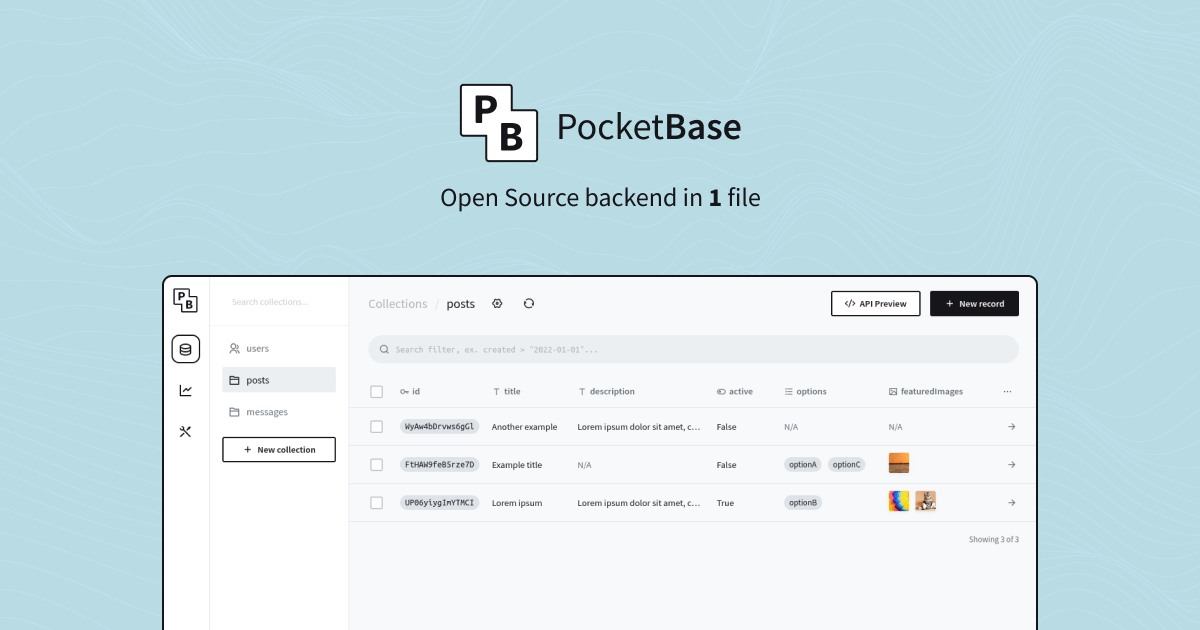
Open Source backend in 1 file with realtime database, authentication, file storage and admin dashboard
WXT provides the best developer experience, making it quick, easy, and fun to develop web extensions. With built-in utilities for building, zipping, and publishing your extension, it's easy to get started.
🧩 The Browser Extension Framework

The easiest way to use IndexedDB. A lightweight, minimalistic wrapper that provides a straightforward API for developers using IndexedDB.

Evan You, the creator of the Vue.JS front-end framework, recently announced a technical preview for rolldown-vite, a drop-in replacement for the Vite bundler written in Rust. Early adopters (e.g., Exc

00:00 Intro00:38 Baseline01:50 light-dark()02:34 Container queries04:46 scroll-state()05:39 dialog07:06 Document Picture-in-PictureLearn HTML CSS: https://le...
Good overview. Container Queries alone are worth the watch!
FastShell: HTML5, Sass and JavaScript boilerplate for Gulp

Some days before we are using flash for buttons, gallery etc, later now JavaScript frameworks like jQuery, Mootools , Scriptallicious and Prototype replace the flash with a light weight code and we...